
From Minecraft to Unity: IPF IT Employees Help Students Bring Ideas to Life
Tierra Nelson
September 16, 2026
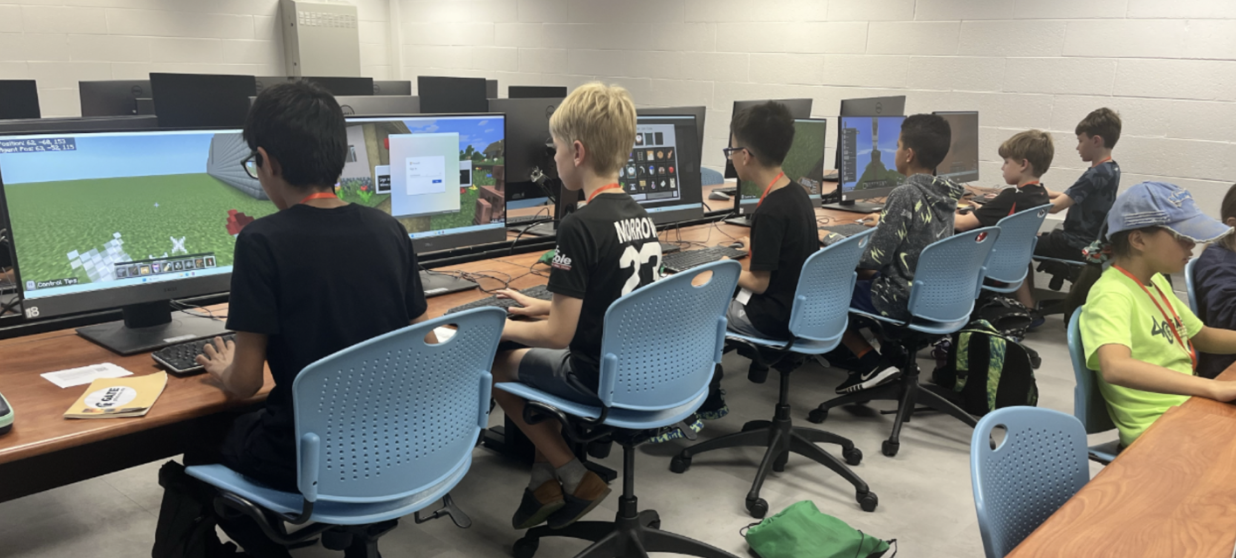
The last few days of the Minecraft Game Design camp were a little chaotic. Students were moving around the room, testing each other's games, showing off what they had built, and helping one another find bugs and work through problems.
For Ric Bruce, assistant director of Information Technology (IT) for Infrastructure Planning and Facilities (IPF), watching the students interact was one of the highlights. They weren't just playing games. They were debugging, giving feedback, refining their ideas, and learning how to solve problems together.
At the center of that experience were two members of the IPF IT team, Allen Scheck and Joseph Friend. Allen, a full-time IT employee, and Joe, a student IT assistant, spent part of their summer teaching through Michigan State University's (MSU) Gifted and Talented Education (GATE) summer outreach camps.
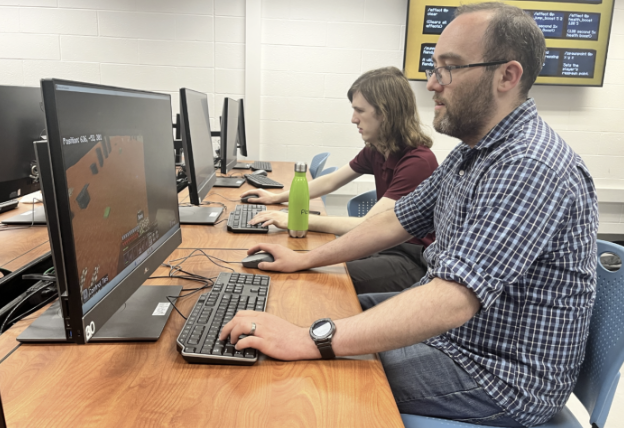
GATE gives gifted and talented students opportunities to explore subjects in greater depth through hands-on summer courses. This year, Allen and Joe brought their IT experience to two game-focused classes through the Gifted University for Precocious and Passionate Youth (GUPPY) program and the Math, Science, and Technology (MST) course: Minecraft Game Design and Unity Game Development. The classes gave students the opportunity to turn ideas from their imagination into games they could build and share.
In the Minecraft course, students learned Redstone, commands, and level design as they created their own dungeons and playable experiences. In Unity Development, they worked with 3D game objects, coding, and design while learning the fundamentals of game development. “I had the chance to play one created by an eighth grader, and the creativity and thought that went into it was incredible,” said Ric.
The finished games were exciting to see, and getting there was part of the experience. For students working with these tools for the first time, the amount of information could be overwhelming, especially when they were trying to accomplish in a week what can take months or years to learn. There were moments of frustration and a few tears, but students had to work through the challenges to get their ideas across the finish line.
"We wanted them to learn how to break things down into smaller parts and compartmentalize their focus," Allen and Joe said. "It's a skill that helps to accomplish even the most monumental project through the power of patience."
That lesson came to life during the final days of the Minecraft class, when students began testing one another's games. They found bugs, offered suggestions and helped classmates troubleshoot when Allen and Joe were busy working with other students.
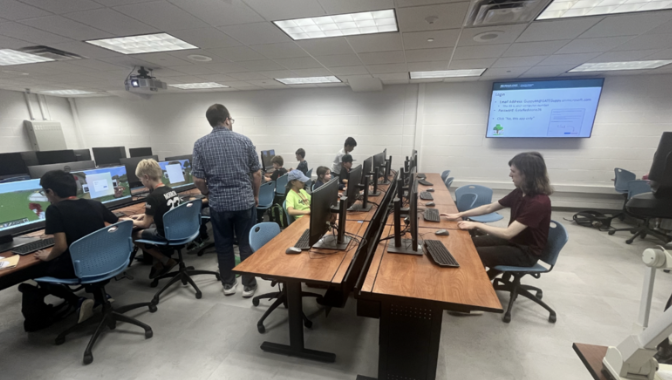
The instructors also used the opportunity to teach students how to give constructive feedback. After seeing some unhelpful comments during the previous year's camp, Allen and Joe encouraged students to be specific and kind when responding to one another's work. Instead of simply saying a game was confusing or not fun, students were encouraged to explain what they were experiencing and suggest ways to improve it.
For Allen, this was his second year teaching a GATE camp. It was Joe's first time. Both were initially drawn to the opportunity as a way to use skills they don't normally apply in their work at IPF IT, though they had some initial questions about whether they could pull off a week of teaching.
The experience came with plenty of preparation and some stress, but it also gave them an opportunity to share their knowledge with students and watch them discover what they could create.
For other MSU employees considering volunteering to teach a GATE or GUPPY class, Allen and Joe offer an honest assessment; be prepared for a significant time commitment and a classroom that can get chaotic but also be ready to have fun and work with some great kids.
The experience gives students more than an introduction to game development. They practice breaking down complex problems, developing patience when things don't work the first time, collaborating with others, and turning an idea into something tangible. For Allen and Joe, getting to be part of that process made stepping outside their usual roles well worth it.
Information about the programs, resources and registration opportunities can be found on the GATE website.