
Behind the Detours: How IPF Plans for Safety and Access During Major Construction
Tierra Nelson
September 16, 2026
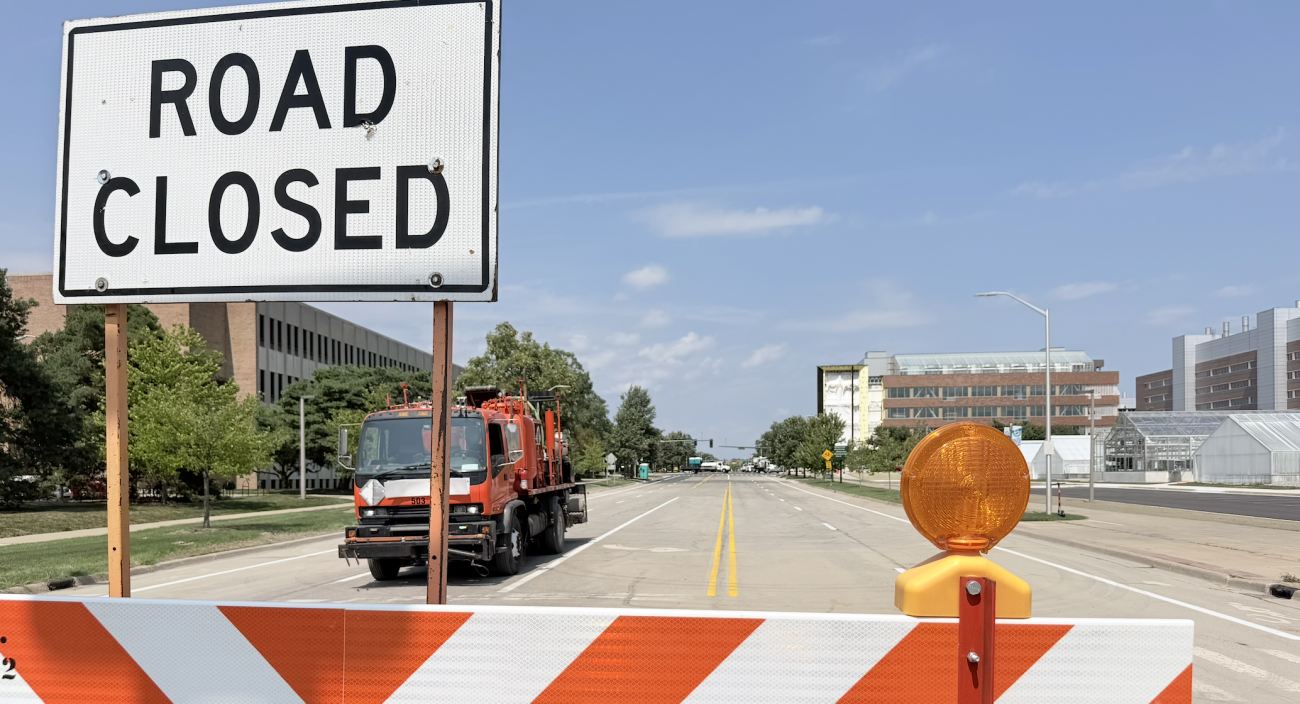
Large-scale construction projects have shaped Michigan State University’s (MSU) campus over the years, requiring road closures, sidewalk detours, and changes to traffic patterns to accommodate the work.
While construction can temporarily impact how students, faculty, staff, and visitors move through campus, Infrastructure Planning & Facilities (IPF) approaches every closure with careful planning and coordination. The goal is simple: keep the campus community safe while maintaining as much accessibility as possible.
At IPF, safety is always the primary factor when deciding whether to close a road or pedestrian pathway. If work can be completed safely without a full closure, crews will use measures such as flag control, temporary two-way traffic, or adjusted lane configurations.
But when heavy equipment swing radiuses, deep excavations, truck access routes, or fall zones create unsafe conditions near active travel paths, closures become necessary. In those cases, clearly signed detours are established and added to IPF’s interactive closures and detours map, which also updates campus wayfinding tools.
IPF also considers the academic calendar when scheduling more disruptive work. Whenever possible, major roadway impacts are planned during summer or winter breaks, when campus population is lower.
When work can’t be avoided during the academic year, teams coordinate around high-traffic periods such as student move-in and major athletic events to reduce impact.
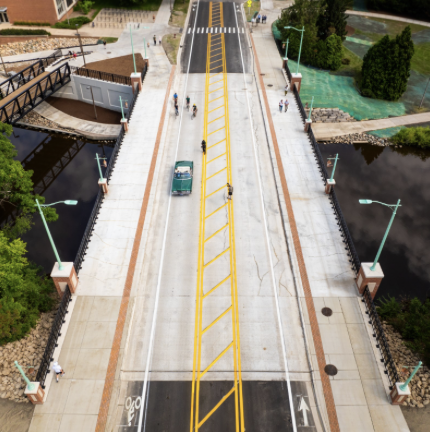
Some projects present unique mobility challenges. The Farm Lane Bridge reconstruction is one example. Because it serves as a primary river crossing, extensive pre-planning and stakeholder engagement were needed.
To maintain pedestrian access, a separate pedestrian bridge was constructed first before vehicle bridge work began. Construction was spread across multiple summers, with no work taking place during the fall semester. Temporary two-way traffic was also established on North Shaw Lane to maintain access to Erickson Hall and the International Center.
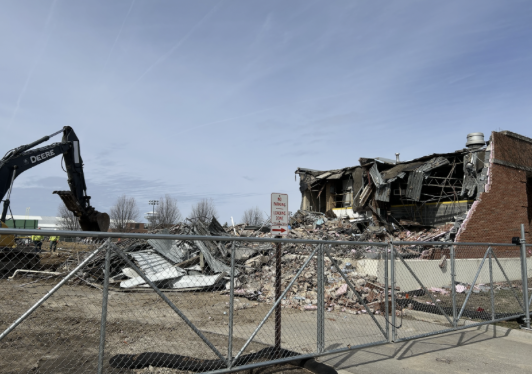
Another example is the Leinweber Center for Engineering and Digital Innovation (EDIC) project, which required Red Cedar Road to be closed and later reopened during construction. The project also included the demolition of Urban Planning and Landscape Architecture (UPLA) building and the Water Reservoir. With Red Cedar Road scheduled to permanently close next summer, the project illustrates how construction can create both temporary and lasting changes to campus roads and traffic patterns.
Once a closure or detour is implemented, it’s continuously evaluated. IPF project managers work closely with the MSU Department of Police and Public Safety and university traffic engineer Stephanie O’Donnell to monitor roadway conditions daily and address concerns as they arise.
IPF works with a broad group of campus partners during project planning and implementation. Stakeholders often include academic departments, the Resource Center for Persons with Disabilities, Classroom Scheduling, Residential and Hospitality Services, the All-University Traffic and Transportation Committee, and campus public safety officials.
Most major projects also feature dedicated webpages with contact information, allowing community members to submit feedback directly. The interactive detour map provides real-time navigation support to help you plan your routes around construction areas.