
Designing a Better Campus: IPF-Sponsored Projects Shine at MSU Design Day

Tierra Nelson
May 13, 2026
Each year, Michigan State University’s Design Day showcases the creativity, innovation, and problem-solving skills of graduating undergraduate students as they present real-world solutions to complex challenges. Design Day is a premier undergraduate academic event highlighting the creativity and ingenuity of Spartan Engineering students. This spring, Infrastructure Planning and Facilities (IPF) proudly sponsored several student teams whose projects reflect a shared commitment to accessibility, sustainability and campus safety.
From inclusive design to global impact and environmental stewardship, these projects highlight how collaboration between students and campus partners can drive meaningful change.
Accessible Signage

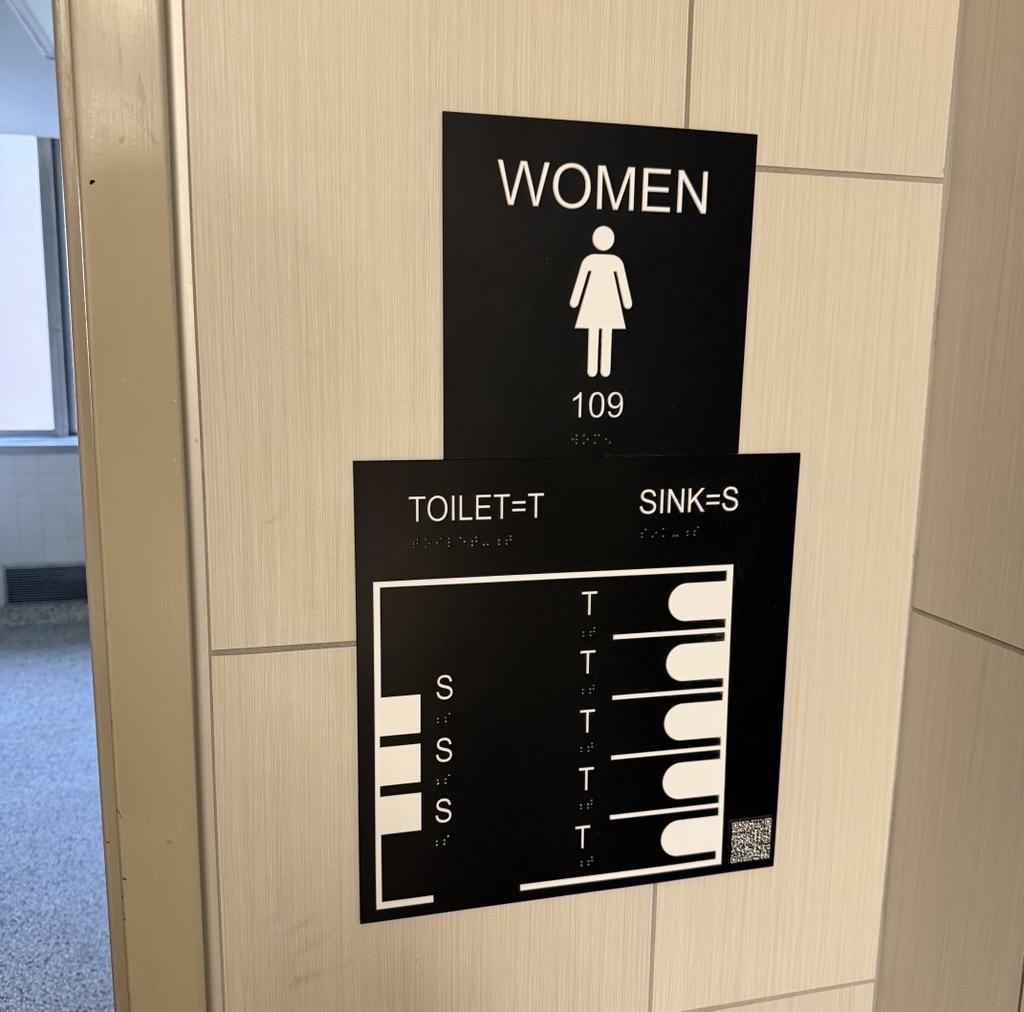
Co-sponsored by IPF’s Adam Lawver and Assistant Professor of Writing, Rhetoric, and Cultures Casey McArdle, one student team focused on improving accessible signage for visually impaired users by designing restroom floor plans with braille and tactile elements. The team developed the layouts by replicating restroom configurations in AutoCAD, which were then sent to IPF’s Sign Shop for manufacturing. There, a rotary engraver was used to carve the raised text and tactile map, and holes were drilled for braille dots, which were inserted by hand using a braille pen. The signage will be installed at Bessey Hall this summer to conduct a pilot and measure impact from users over the next year. This project was completed in collaboration with campus partners, including the Resource Center for Persons with Disabilities (RCPD) and Institutional Space Planning and Management (ISPM).
The designs incorporate raised text, braille, high-contrast visuals, standardized placement, and tactile elements to better support individuals with visual impairments. As an added feature, the team also integrated a QR code into the signage that plays an audio message describing the restroom layout when scanned, providing an additionallayer of accessibility beyond braille. Through user interviews, research, conversations with IPF’s Sign Shop, and testing, the team produced a durable and inclusive solution, along with comprehensive documentation to support future implementation across campus.


Above-Knee Prosthetic Bike Leg


Two Mechanical Engineering project teams co-sponsored by MSU Bikes and Mary Free Bed explored an innovative way to repurpose abandoned bicycles, an abundant campus resource and one that’s readily available globally, into functional prosthetic devices. Each year, hundreds of bikes are left behind at MSU, many of which are impounded by the MSU Parking Department staff. Rather than allowing these materials to go to waste, these student teams worked to give them new purpose. Reuse is a core part of the mission of MSU Bikes and its parent department, MSU Surplus Store and Recycling Center.
Building on a partnership with certified prosthetist Ben Hogan, one of the first student mechanics for MSU Bikes, and MSU Bikes’ Sustainable Transportation Manager Tim Potter, the students refined Ben’s design for an above-the-knee prosthetic made entirely from bicycle components. With a focus on affordability, durability, and ease of production, the project aims to address a critical global need; nearly 90% of individuals in developing countries lack access and the financial resources to afford modernprosthetic care.

By testing their prototypes with a volunteer client of Ben’s and refining functionality in real-world conditions, the team demonstrated how accessible materials and thoughtful engineering can improve mobility and quality of life on a global scale.
Design of a Cover System for Vermicomposting
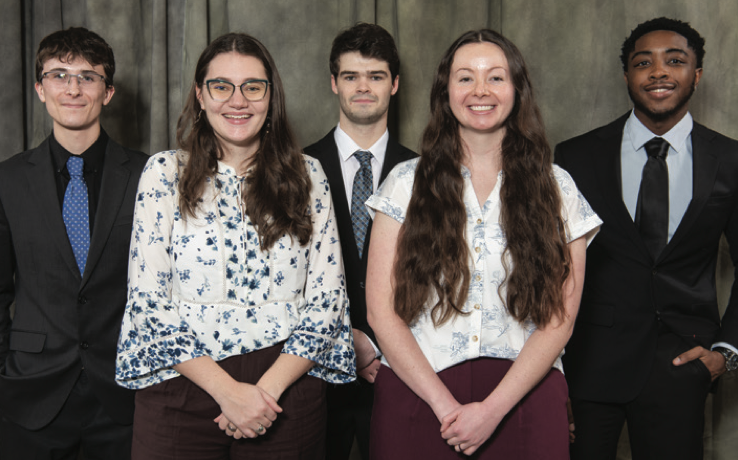
Another IPF-supported project, sponsored by Dave Smith, Emily Bowers, and the MSU Surplus Store and Recycling Center (SSRC), tackled a sustainability challenge closer to home: maintaining effective vermicomposting operations during Michigan winters. The project began by addressing a key operational issue; the SSRC operates a large vermicomposting program that diverts campus food scraps from landfills, but during the winter, workers must manually pull heavy plastic sheets over compost wedges for insulation. This process is slow, labor-intensive, and can harm the worms when the plastic settles directly on the compost.
To solve this, the team designed a system to thermally insulate composting wedges while improving efficiency and protecting the worms. Their solution suspends an insulated covering above the compost, reducing direct contact while improving heat retention by creating 22% greater thermal resistance during test conditions.
This project supports SSRC’s broader mission to lead MSU toward a culture of zero waste by improving operational efficiency, reducing landfill impact, and supporting a circular food system.

Intelligent Alert System for Red-Light Runners

A third MSU Bikes-sponsored team addressed a growing safety concern nationally for the 3rd semester in a row: red-light running at signalized intersections. Their Intelligent Alert System (ITAS) uses a combination of cameras, radar, and real-time data processing to detect potential red-light runners and warn bicyclists, pedestrians, motorists and others waiting at the intersection.

The system’s three-part design senses traffic signal changes, tracks the speed of approaching vehicles and delivers audio and visual alerts when a risk is detected. Designed to be solar powered, and weather-resistant, the system represents a forward-thinking approach to greatly improving safety for cyclists, pedestrians, and others across campus and eventually around the country.
Through its support of Design Day, IPF continues to invest in innovative ideas that align with its mission to build and maintain a campus that is accessible, sustainable and safe for all. These student projects not only address immediate challenges but also offer scalable solutions with the potential for long-term positive impact for society.
To explore more student projects from this year’s event, view the full Design Day booklet online.
IPF Sponsored projects can be found on the following pages:
- MSU Bikes Service Center Intelligent Alert System for Red-Light Runners pg. 105
- MSU Bikes Service Center Above-Knee Prosthetic Bike Leg pg. 119 & 120
- MSU Surplus Store and Recycling Center Design of a Cover System for Vermicomposting pg. 128
- MSU IPF, ISPM, RCPD, XA Accessible Signage pg. 152