
Campuswide Hydrant Flushing - Red Water Alert
Campuswide
–
Red water alert
Routine maintenance of flushing fire hydrants clears mineral deposits from the water mains and ensures hydrants are working perfectly for fire protection. You may experience temporary low water pressure or slight discoloration.
UPDATE: start date moved to October 5.
During this work, some discoloration of the water supply may occur throughout campus. However, this discoloration is harmless in terms of sanitation and safety. Sinks, restrooms, showers, safety showers and eyewashes could be affected. It is acceptable to run water in sinks and showers to help clear the discolored water through the system.
The temporary discoloration of the water is due to mineral deposits in the water and may discolor clothing if used for laundry. Rewashing clothes prior to drying should resolve the issue. We apologize for the inconvenience.
Water bottle filling stations will not be impacted because they have an additional filter on them.
Quick Facts
- MSU water mains run for 74 miles — 50% longer than the Red Cedar River
- Average 2.5 - 4 million gallons a day support the 60,000 students, faculty and staff on campus, that adds to about 1 billion gallons a year!
The water on MSU campus comes from five different water systems. Most of campus is in the North Campus Distribution System, which is supplied by the water treatment plant right here on campus. The water in the North Campus and the Farms Distribution Systems are monitored by MSU professional and tested frequently for federal and state mandated testing and for our own quality control measures. We have staff on site 24/7 with jobs to monitor our water quality and maintain our water systems.
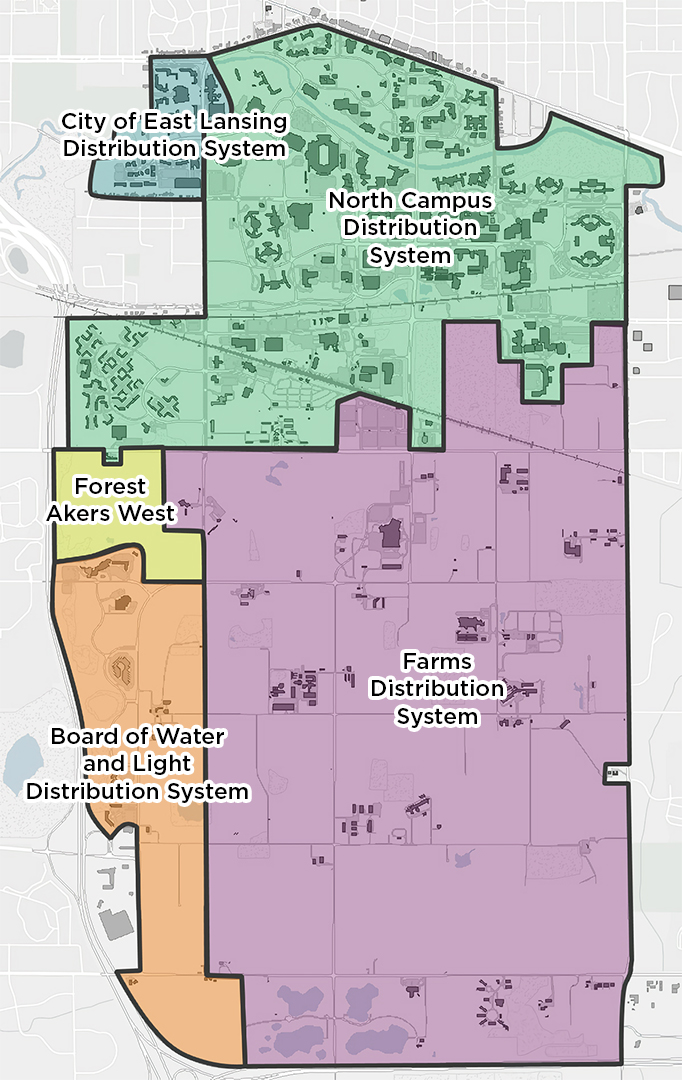
To find out more about how IPF has worked to improve campus water quality and reduce the amount and severity of discoloration events, please visit our page about the water treatment plant.
ContactIPF at (517) 353-1760.