
Public Notice for Water - July 2025
IMPORTANT INFORMATION ABOUT YOUR DRINKING WATER
Michigan State University Has Levels of Combined Radium Above Drinking Water Standards
Our water system recently violated a drinking water standard. Although this is not an emergency, as our customers, you have a right to know what happened, what you should do, and what we are doing to correct this situation.
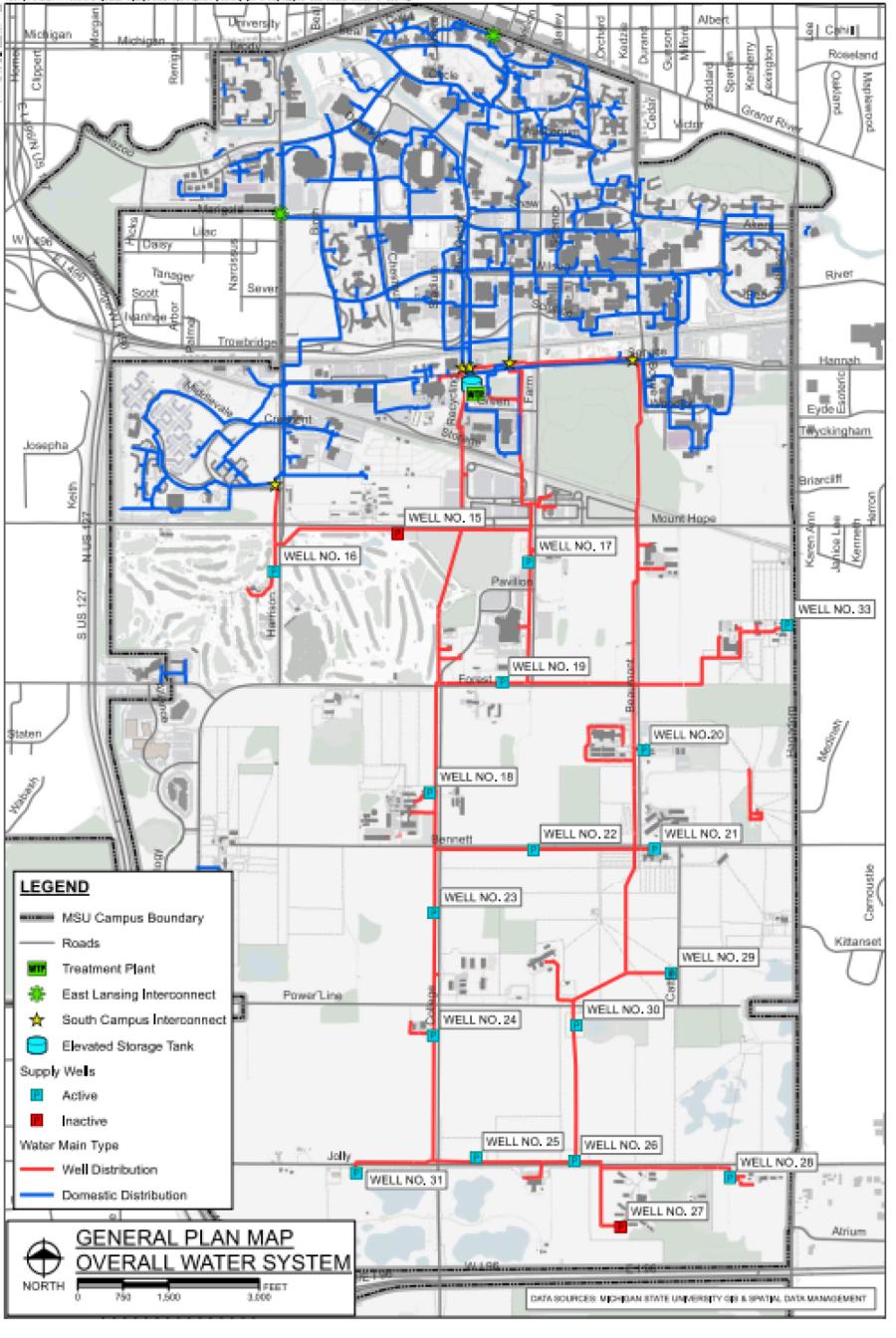
We routinely monitor for the presence of drinking water contaminants. Testing results for samples taken on July 2, 2025, at one of our wells (Well 26) exceeds the standard, or maximum contaminant level (MCL), for combined radium. The standard for combined radium is 5 picocuries per liter (pCi/L). The average level of combined radium over the last year was 5.5 pCi/L. (See an enlarged well system map.)
What should I do?
You do not need to use an alternative (e.g., bottled) water supply. However, if you have specific health concerns, consult your doctor.
What does this mean?
This is not an immediate risk. If it had been, you would have been notified immediately. However, some people who drink water containing radium-226 or radium-228 in excess of the MCL over many years may have an increased risk of getting cancer.
What happened? What is being done?
Results from July 2, 2025, monitoring for combined radium resulted in an exceedance of the drinking water standard of combined radium with a result of 5.5 pCi/L. We took the well offline on July 23, 2025, so the well has not been distributing drinking water since July 24, 2025. We are working with the Department of Environment, Great Lakes, and Energy to resolve this and hope to resolve it soon.
For more information, please contact Thomas Silsby at 517-884-7109 or silsbyth@msu.edu.
Please share this information with all the other people who drink this water, especially those who may not have received this notice directly (for example, people in apartments, nursing homes, schools, and businesses). You can do this by posting this notice in a public place or distributing copies by hand or mail.
This notice is from Michigan State University.
- What area of campus did this well serve?
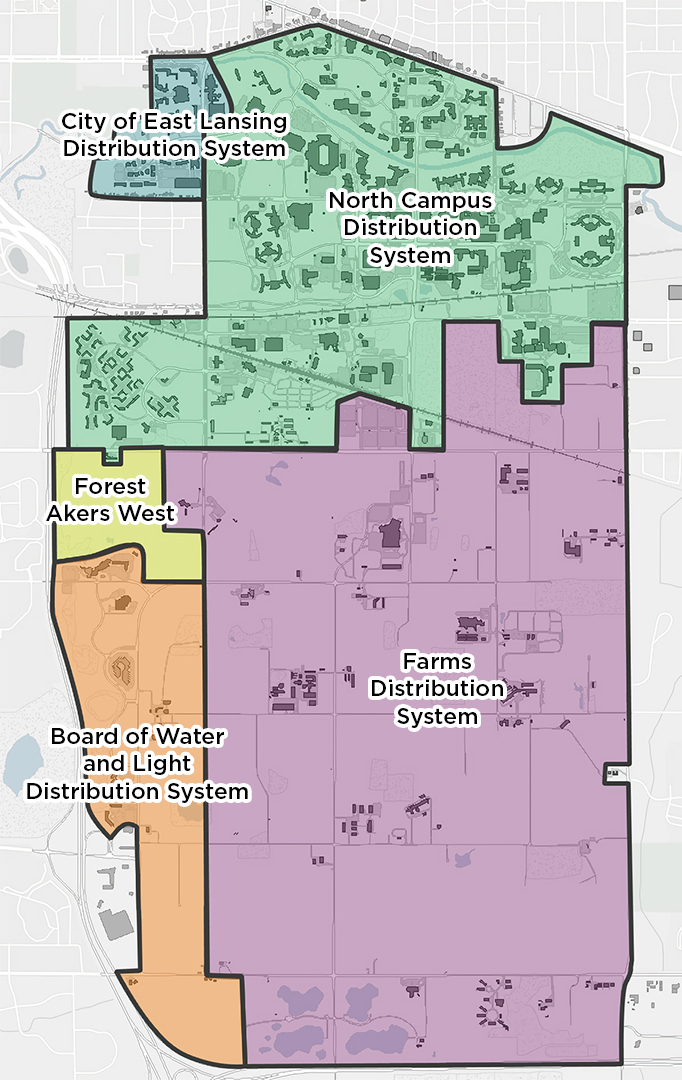
Well 26 was part of the south farms water system.
- What is radium?
To understand the definitions of Radium-226 and Radium-228, consider the following points:
- Origin: Both isotopes Radium-226 and radium-228 are naturally occurring and can be found in trace amounts in soil, rocks, and groundwater.
- Health Risks: Exposure to radium isotopes can pose serious health risks, including cancer, due to their radioactive properties.
- Detection: Radium isotopes can be detected using specialized radiation detection equipment in environmental monitoring.
- Regulation: Both isotopes are regulated by health and environmental agencies due to their potential hazards.
- When was the well last tested and what was the result?
Well #26 has been tested in each quarter of 2025. The average of these four quarterly test results is 5.5 pC/l. This is .5 pC/l (Picocurie per Liter) over the maximum contaminant level standard set by the Department of Great Lakes and Energy.
- How does the well system work at MSU?
MSU operates 17 wells to supply the East Lansing campus with water. All of these wells are connected by a common water main distribution system. The south wells portion of the system collects water from the various wells and transports water to the water treatment plant. Along the path of water main, this system also provides drinking water to the various research farms and other facilities along the way to the treatment plant. The treatment plant removes Iron, Manganese, and Radium from the water. The water from the treatment plant is then sent to North campus for use.
- Is the water on north campus impacted?
Water on north campus is not impacted from this notification.
- How often is water tested for radium?
The schedule for testing radium varies by the previous results from each site.
Currently, there are two well sites and the water treatment plant that are tested quarterly (four times a year).
The other 15 well sites are tested on three-year intervals.
Declaration of intent of distribution of notice.
- Well 26 was taken out of service on July 24, 2025. No water will be withdrawn from the well for public consumption until agreed upon action and resolution.
- Post the Public Notice along with a map of the well system on the building entrances and vestibules in the impacted area.
- Email to Veterinary Diagnostic Lab staff for additional dissemination.
- Approximately 300 people are potentially impacted, less than 10 people reside in the area, the remaining are transient workers or visitors.