
Infrastructure Planning and Facilities: 2025 Year in Review

Danielle Fowler
December 17, 2025
Infrastructure Planning and Facilities (IPF) marked a year defined by innovation, sustainability, and operational excellence, highlighted by meaningful progress in environmental stewardship, community engagement, and campus infrastructure.
First, a few numbers

In 2025, Infrastructure Planning and Facilities:
- Processed 8,527 general service requests
- Created 25,297 trouble call orders
- Conducted 546 MSU chartered bus trips
- Processed 1,672,699 pieces of mail in Mail Services
- Managed over $2 billion in projects in planning, design and construction
- Achieved a best-in-class annual inventory variance of 0.27%
- Hosted 12,567 guests at the Kellogg Biological Station Bird Sanctuary
- Welcomed 72,053 visitors to Hidden Lake Gardens
- Sent 96% of the 6 million pounds of recycling collected on campus to Michigan companies
- Maintained a 99.4% on-time delivery standard in Stores and Warehouses with an average of 4.5 hours from receipt to delivery
Environmental Stewardship and Sustainability
Restoring the Red Cedar River and its banks. IPF’s Landscape Services is a founding member of the Red Cedar Stewardship and Recreation Committee (RCSRC), comprised of community partners including the Michigan Waterways Stewards, the City of East Lansing, the City of Lansing, Meridian Township, and numerous MSU departments and student organizations. The Committee’s mission is to foster shared/cohesive stewardship of the Red Cedar, urging the Spartan and East Lansing communities to take pride in the health of one of the most iconic natural features in the area.
Revisions to temperature set-point policy. The new temperature set-point policy was approved and implementation is underway. This first phase includes 296 air-handling systems serving offices, classrooms and common areas across 45 buildings. It is estimated to help meet our campus sustainability goals through avoiding approximately $400,000 in annual utility costs.
Creating sustainable pollinator gardens. IPF, in collaboration with the Department of Entomology, is converting 30 acres of campus turf into pollinator-friendly gardens and meadows to support native insects and reduce maintenance costs and labor. Investing funds that would have been for standard turf maintenance, the team reduced mowing of 22 acres, and planted six acres with Michigan genotype wildflower seed and 3,952 plant plugs.
Diverting waste. The Surplus Store & Recycling Center recovered 450,000 lbs of material from Spartan Stadium renovations, diverting 70 percent from the landfill.

Operational Excellence
Automated Fault Detection and Diagnostics (AFDD). Central Control, Construction Quality Assurance and HVAC Shop teams collaborated in the first deployment of an AFDD platform at the Multicultural Facility. This ‘ongoing commissioning’ approach will help address any lingering root cause HVAC/controls issues as the building is turned over to Maintenance and Operations.
Creation of Custodial Support Services. This new team is responsible for non-traditional or specialized services for Custodial including logistics, floor crews, event cleaning, and equipment maintenance.
Sustainable transportation solutions. The Transportation Services team continued advancing the Shared Vehicle Pooling Program for the MSU community, with full deployment anticipated in January 2026. A key highlight was the successful rollout to IPF, DPPS, Athletics, IT Services, and Stores and Logistics, resulting in annual savings of approximately $84,938 across these five departments.
University Real Estate Executive Committee. IPF is establishing this committee to ensure that real estate decisions align with the university’s long-term strategic priorities. This committee will provide leadership oversight, foster collaboration across key units, and guide decisions that optimize MSU’s real estate portfolio to support academic excellence, research innovation, and financial sustainability.
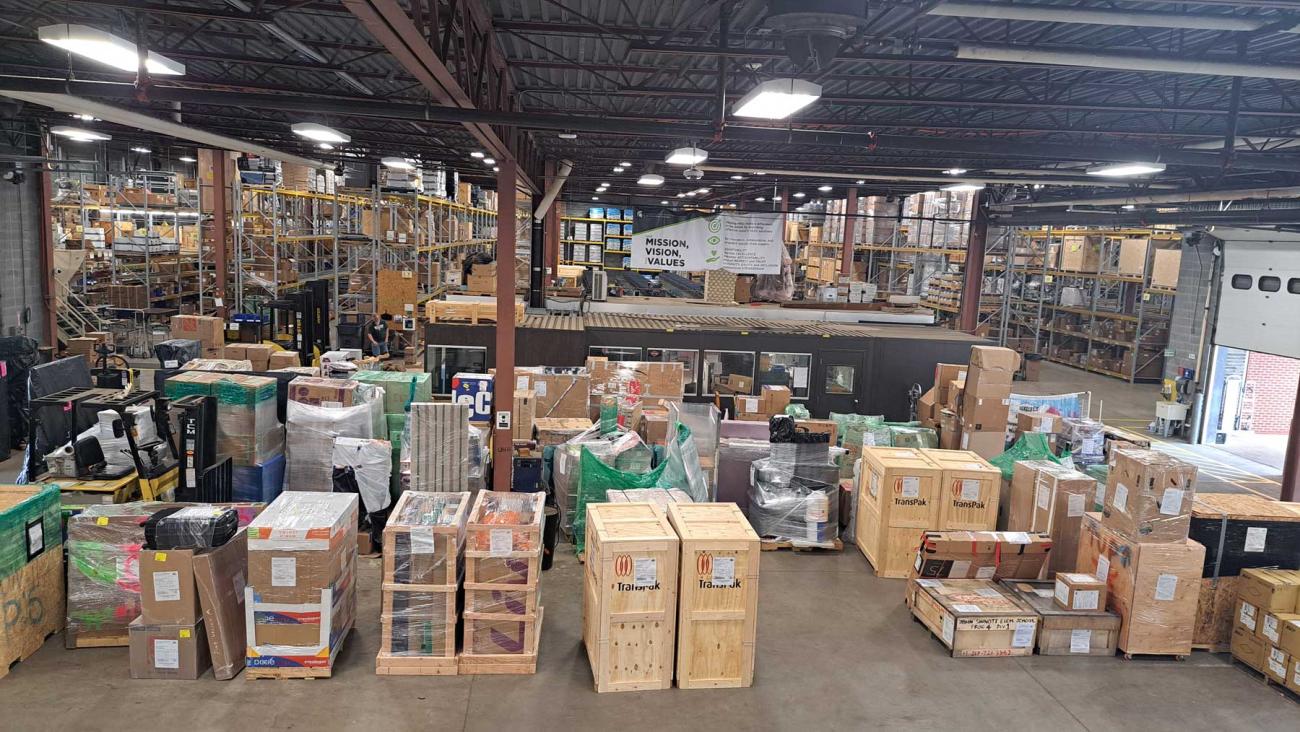
Consolidating Stores & Logistics. In 2025, IPF’s Material and Logistics assisted in the acquisition of University Procurement and Logistics, taking over management of University Stores, Logistics, and Mail Services. The package of services has been renamed to Stores & Logistics.
Customer Service & Employee Development
Evacuation map management. IPF IT deployed the evacuation map management system and to date has documented 1,200,000 maps across campus. These maps provide important life safety information to building occupants and the campus community.
SafeMSU app maps. IPF IT also completed work on two new maps for the SafeMSU app, one for emergency phone locations and one for AED locations. Both maps provide increased health and safety tools for MSU.
Developing future leaders. IPF’s Supervisor Equivalency Program has increased from four participants to 12 this year with two graduating and three others on the cusp of graduation. The Leadership Development Program saw the second APPA Leadership Academy cohort of 17 people graduate.
Take Your Child to Work Day. IPF hosted 40 staff with about 60 children in the IPF building and provided refreshments and giveaways in the lunchroom. Hands-on activities were provided in the lunchroom and in the metal shop.
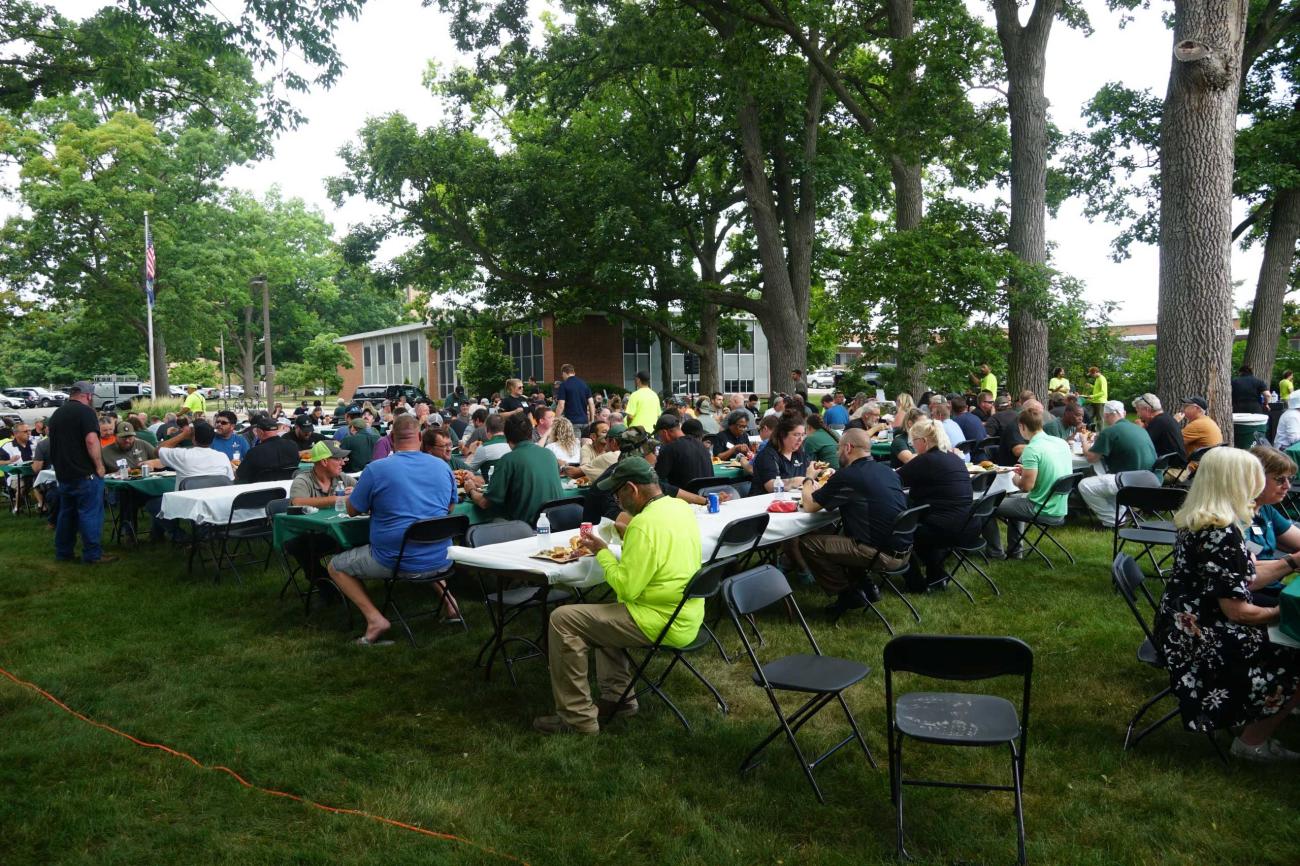
Annual IPF Employee Appreciation Picnic. IPF provided catered food, cornhole tournaments, and other games on the lawn outside of IPF building for all IPF staff in appreciation of their efforts.
Fall Donation Program. IPF staff donated 663 food and non-food items for the Greater Lansing Food Bank, along with five online cash donations.
Enhanced customer service and communication standards. Stores & Warehouse teams elevated communication with campus departments, vendors, and internal partners, which means faster reporting of discrepancies, damage, and vendor issues; proactive updates on backorders and expected lead times; and improved clarity in order documentation, labeling, and tracking.
Customer service guidelines. Maintenance Services have written and incorporated customer service guidelines into the daily work of maintenance staff. Enhancements have been made to customer communication in service requests and in-person settings. Relocating ContactIPF to the IPF building has also increased collaboration between trades and the customer service team.
Community Collaboration & Educational Engagement
A tour to remember: IPF’s Power and Water hosted tours for over 500 students in support of classroom learning objectives. Power and Water also hosted groups of parents and children for power plant tours for Take Your Child to Work Day. One tour group created a video lesson on electricity for a 6th grade Physical Science course.
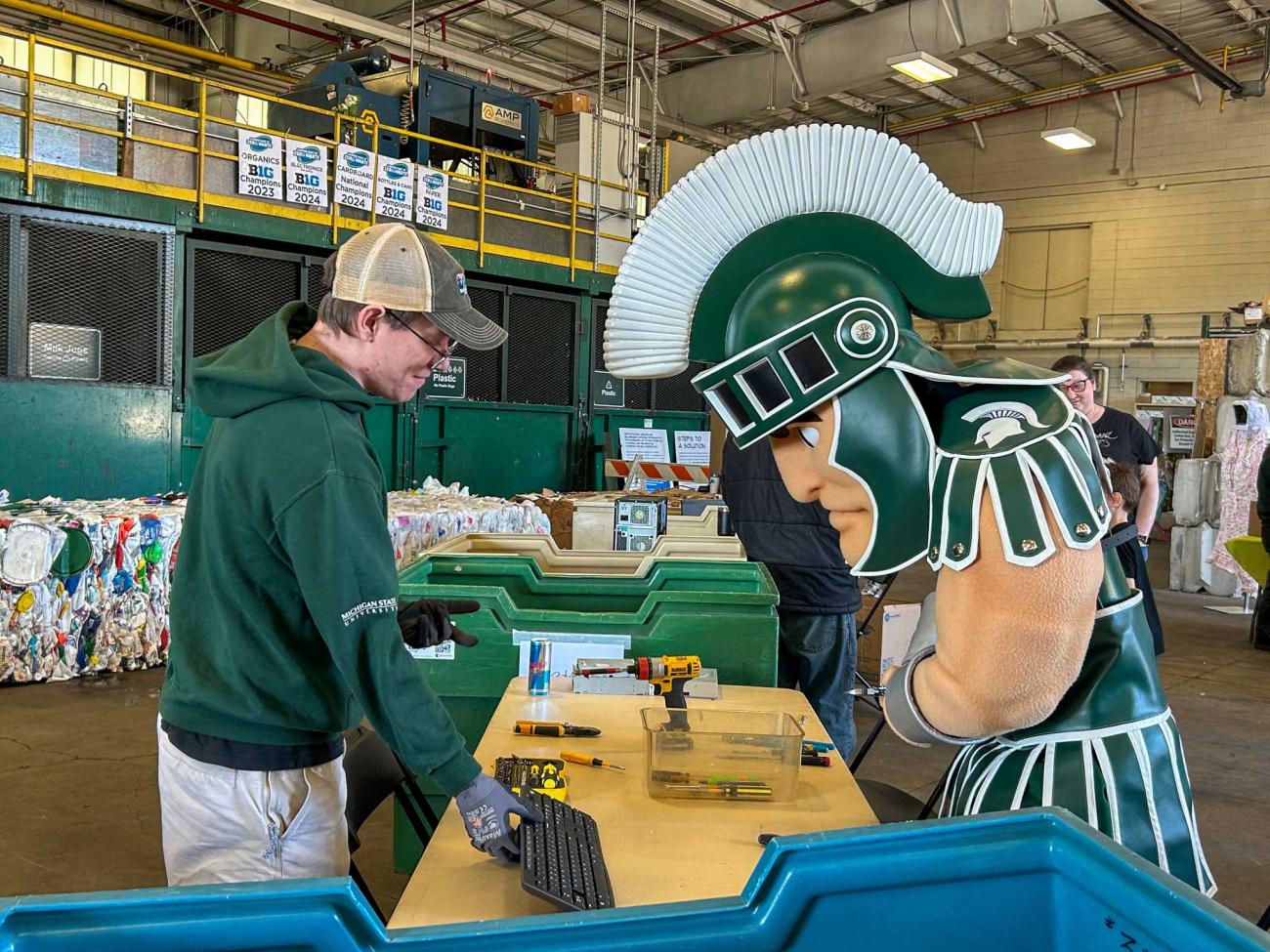
Earth Bash 2025: 350 attendees celebrated all things reduce, reuse, recycle with a day at the Surplus Store and Recycling Center. Activities included seed bomb making, upcycled flower bouquets, upcycled crochet, a Tech Teardown to learn about how electronics are made, tours of the facility, and more.
Surplus Store and Recycling tours: The SSRC hosted over 100 creative reuse events for students and connected with over 14,000 campus and community members through events, experiential learning, hands-on art opportunities, and outreach efforts.
Handle with care: The IPF Setup Crew partnered with Broad Art Museum for an Art Handling Training Certification that allows Setup Worker I’s to be promoted to Setup Worker II’s.
Hands-on supply chain learning: Logistics provided approximately 500 MSU Supply Chain Management students with operational tours of shipping, receiving, distribution, Stores and warehousing. These tours offer real-word exposure and practical experience, demonstrating how operations impact the supply chain. Students gain insights into receiving, inspection, material handling, route delivery, inventory management, order fulfillment, performance metrics, and safety protocols – critical components of the supply chain industry.
Infrastructure & Facility Development
Multicultural Center. The first-of-its-kind 34,000-square-foot Multicultural Center includes an outdoor amphitheater, collaboration spaces, office space for student organizations, prayer rooms, an art gallery wall, and a resource center to help students with academic, mental health and other needs.
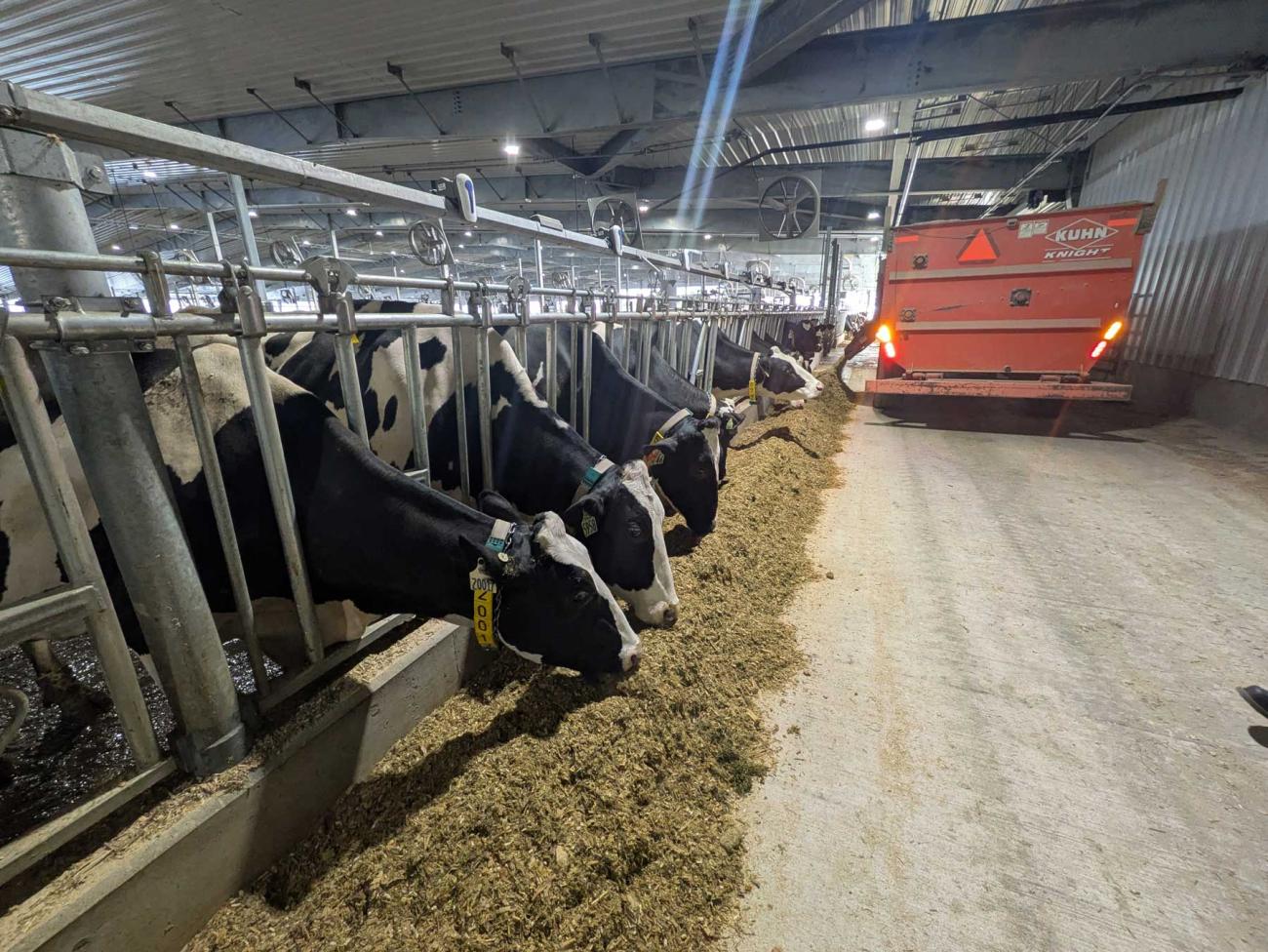
Dairy Cattle and Teaching and Research Center. This new facility expands capacity by increasing herd size by 430 cattle. It also modernizes barns, feed centers, milking parlors, and laboratories, and provides enhanced spaces for student instruction.
Large Animal Imaging Facility. This project repurposes the existing imaging suite in the Clinical Center to accommodate large animal imaging. The project updates building systems, particularly ventilation, to accommodate new MRI and PET Scan equipment. New animal holding rooms were also constructed.
MSU Library: Special Collections Renovation and HVAC Updates. The project includes renovation of the third-floor East Wing of the Main Library to provide necessary improvements for proper temperature and humidity control necessary for long-term preservation. This included environmental separation and isolation from the exterior building envelope, relocation of existing shelving and installation of new compact shelving, and workspace for professional staff, librarians, and archivists.
Campbell Hall renovations. The project addresses major building systems including life safety and accessibility, along with mechanical, electrical, building envelope, and finishes. The project includes renovations to space to support MSU Honors College programming in the former dining room area.
Demolition of Central Services building. Demolition of the Central Services Building was required to make room for a future Spartan Stadium East Tower expansion. The Transportation Services department was moved to the University Services Building on Service Road.
MSU Museum Infrastructure Improvements. To retain its accreditation, the MSU Museum required investment to provide temperature and humidity environmental controls alignment with standards for collection stewardships, storage, and exhibition. This project positioned the MSU Museum to be a catalyst for teaching, learning and research at the intersection of the arts, sciences, and humanities and increases opportunities to compete for federal funding.
Spartan Stadium Video Boards. The large scoreboards in Spartan Stadium were updated to improve the experience for Spartan fans. All three boards on the north and south ends were updated and the final look is very similar to the previous scoreboards.

Spartan Stadium Renovations to Second and Third Floors: The project renovated the University Advancement (UA) space on the second and third floors of the office tower at Spartan Stadium to maximize the use of space and support ever increasing demand on fundraising, by allowing flexible meeting and donor engagement space to host alumni, donor functions, and community events. The renovations have redefined visitors’ first impression and in-person engagement with UA on behalf of the university as they seek donor support.
Spartan Stadium Renovations to West Fourth, Seventh and Eighth Floors: The Spartan Stadium suites and club spaces on the 4th, 7th, and 8th floors of the West Tower were renovated to provide a modern venue for the university to host events, donors, and dignitaries and thereby generate revenue. The existing suites in these areas have not been updated since they were first built in 2004. Updates to the spaces enhanced outdated technology, provided modern ADA-compliant restroom facilities, and included updates to seating, flooring and concessions.
Ribbon cutting: College of Human Medicine Mott Research Building in Flint. The College of Human Medicine’s Charles Stewart Mott Department of Public Health celebrated the completion of its new 40,000 square foot facility in downtown Flint. This expansion strengthens MSU’s commitment to public health and community engagement in Flint. Research efforts will focus on critical areas including health equity, social determinants of health, behavioral health, chronic disease, maternal-child health, healthy behaviors, and environmental justice.
Beam signing for Plant and Environmental Science Building. When complete in 2027, the $200 million project will house state-of-the-art labs for photosynthesis, plant resilience, regenerative agriculture and environmental science. It will include 90 growth chambers, the relocated Center for Advanced Microscopy and a rooftop phytotron (a highly specialized greenhouse) that will enable MSU scientists to study how plants respond to changing carbon dioxide levels and other climate stressors.
Final beam raised on the Henry Ford Health + Michigan State University Health Sciences Research Center in Detroit. This $335 million research facility is the first physical embodiment of the Henry Ford + MSU partnership and will further enable groundbreaking discoveries and translational research for which the partnership is becoming known. A key focus in this research is closing the gap in health care outcomes for people based on race, ethnicity, gender and socioeconomic status.
Awards and Recognition
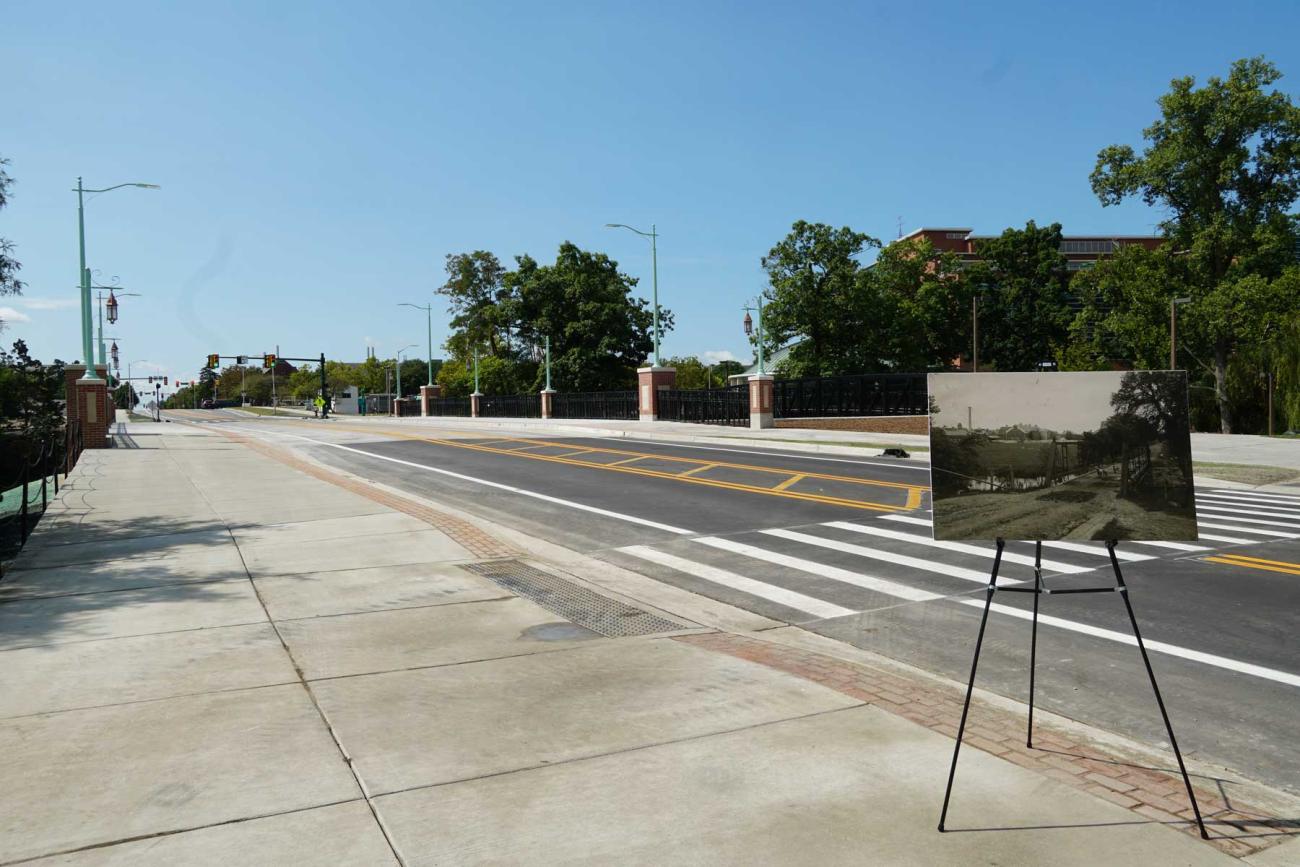
COAA Project Leadership Award Gold for the Farm Lane Bridge Reconstruction. Construction Owners Association of America (COAA)'s Project Leadership Award recognizes leadership, professionalism, and exceptional management by Owners involved in the design and construction process.
ACEC Merit Award for the Farm Lane Bridge. The American Council of Engineering Companies of Michigan (ACEC/Michigan) is the business voice of the Michigan consulting engineering industry.
AURP Master Planning Excellence in Innovation Award for the Crescent Road Innovation Community. This award recognized the individuals and institutions transforming research, discovery and community innovation across North America.
PGMS Green Star Grand Award. This national recognition presented by the Professional Grounds Management Society celebrates excellence in grounds maintenance and landscape management.
2025 AGC Build Michigan Award for the Tom Izzo Football Building. The Build Michigan Award was established in 1995 by the Professional Service Provider Member Council of the AGC of Michigan as a way to recognize the excellence of an entire project team.
Consumers Energy Foundation Planet Award. IPF was awarded a $100,000 grant for the development of native plantings and pollinator habitat along the Red Cedar River on campus.
University Health and Wellbeing Active Workplace Award. The UHW Active Workplace Award is a one-time funding opportunity designed to help units and departments at MSU promote wellness by providing fitness equipment (walking pad/desk cycle) for employee use. IPF used the awarded funds for a walking pad and desk cycle for staff use.
Lansing Chamber of Commerce, Celebration of Regional Growth (CORG) Award for the Student Recreation and Wellness Center. The Celebration of Regional Growth Awards honor businesses and institutions that have made significant contributions to the region’s economic vitality, community well-being, and long-term prosperity.
Michigan Green Building Collaborative Innovative Project Award. The new, state-of-the-art Dairy Cattle Teaching and Research Center at Michigan State University has been recognized by the MiGBC as one of the state’s most innovative projects in 2025. The $75 million center serves as a national model for agricultural sustainability, hands-on teaching and leading dairy science research.
And a beautiful grand finale

A new MSU holiday tradition. Every evening at 5:30 p.m. through January 4, Beaumont Tower and its surrounding area will be illuminated in lights. Huge thank you to IPF’s Streetlight team for making this possible.
IPF’s dedication to its mission shines through these achievements—from advancing sustainability to improving operations that put the needs of the MSU community first. Together, these efforts strengthen IPF’s leadership in shaping a campus where Spartans are empowered to change the world.